Even within our solar system, there’s a lot of variance in the planets we can find. Other than Earth, there are currently 7 objects classified as planets in our solar system. Before we begin, there will be some terms which recur in describing the planets. It is helpful to know, for example, that the orbital period is the time it takes for an object to go around another, while the rotational period is the time for it to to rotate once on its axis. Additionally, a common unit used for describing distance is the astronomical unit (notated au, not AU). An au, which is based on the average Earth-Sun distance, is equivalent to about 149,598,000,000 meters, or 92,956,000 miles. In the past, there has been debate over how exactly the precise value is calculated. Also note that that 1) kilometer or mile equivalents of some measurements will sometimes be left out for brevity and that 2) most values are not exact, even if the article doesn’t say “about.”
Mercury
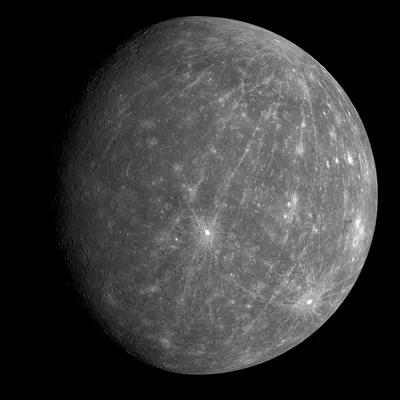
Mercury is the closest planet to the sun, at a distance of about 0.387 aus, or about 35,983,000 miles. In two respects, it goes around the sun the fastest of the planets. For one, its orbital period is 87.969 days, or about 1/4 of an Earth year. Also, due to orbital mechanics, the speed at which the planet is moving through space is faster than the others. Even though it goes around the sun fast, it rotates slowly, so that its day is equivalent to 58.646 Earth days. With a diameter 38% that of Earth’s (about 4,880 kilometers or 3,032 miles), it’s also the smallest planet of the ones that go around the Sun. Since it’s so close to the sun, surface temperatures can reach 430 degrees Celsius (806 degrees Fahrenheit). But it doesn’t have air like Earth has air, so the dark side can cool down to -170 degrees Celsius (-274 degrees Fahrenheit). It also doesn’t have seasons. If we could see it up close with our own eyes, it would look grayish-brown. Like our moon, it has craters from objects in space hitting it. Mercury is too small and close to the Sun to have its own moon.
Venus
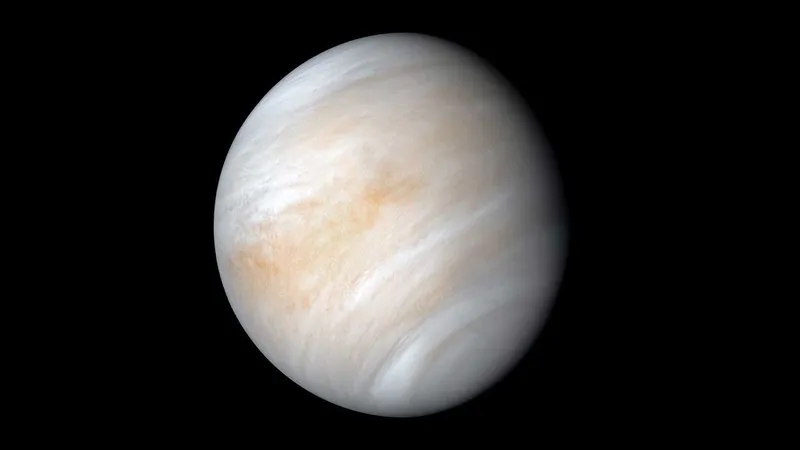
The next planet is Venus, with an extreme average surface temperature of 465 degrees Celsius, due to the planet’s thick atmosphere. The surface pressure is about 90 bar (predominantly carbon dioxide), where 1 bar is about Earth’s atmospheric pressure at sea level. Venus spins in the opposite direction to the other planets because its rotational inclination is 177.3 degrees. Also, since its rotational period is 243 days and its orbital period is nearly 225 days, its days are longer than its years. Venus is bigger than Mercury and is close to the size of Earth (about 0.949 Earth diameters). Even though this planet is so unusual, it has volcanoes and mountains like Earth. Russia (then the Soviet Union) sent machines to Venus decades ago that captured photos of the surface. Though the atmosphere is so hot, thick, and corrosive on the surface,it lessens it intensity at higher altitudes, inviting possibilities for blimp-like probes or far-future floating sky cities. Like Mercury, Venus does not have a moon.
Earth
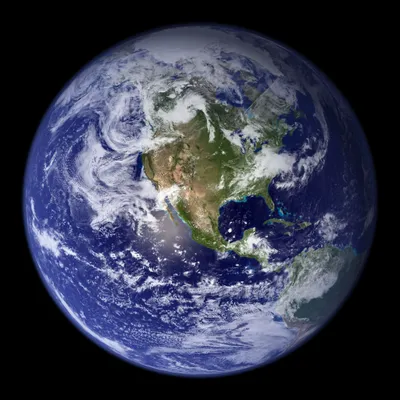
Earth is our planet; every person who has ever lived has lived on Earth. Though about 8 billion people are alive now, the total number of people who have ever lived is much larger—around 117 billion. Before Yuri Gagarin’s first spaceflight in April of 1961, no one had ever left our planet and its atmosphere. It is the only planet we know that has life, and the only planet we can survive on. Temperatures are comparatively pleasant for us and the the sky has the optimal mix of nitrogen, oxygen, and other gases.While many constants are defined in terms of Earth, notable facts include the reality that Earth’s orbital period is 365.256 days (contributing to needing “leap years”) and that there’s a non-negligible rotational inclination of 23.45 degrees, creating seasons. It is important to protect Earth since we don’t know another planet like it. One of the most obvious things in the night sky is our moon (about 384,400 kilometers away), sometimes called Luna.
Mars
Jupiter
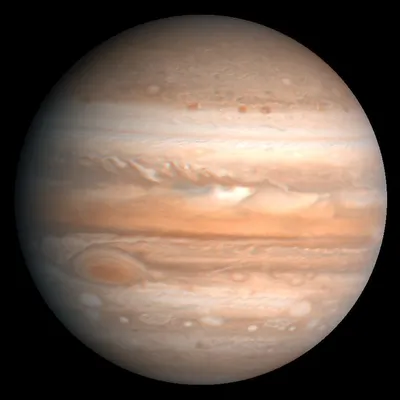
Jupiter is the biggest of the planets that go around the Sun. The inside of the planet might be solid, but it’s mostly gas. Because of that, it is called a “gas giant.” It has stripes of many colors: some are brown or white, and others look more blue. Storms can lie in these clouds, and a popular example is the Great Red Spot. Unlike Earth’s storms, the storms on Jupiter can last for hundreds of years. Also, while the closer planets have no moons or maybe one or two, Jupiter has at least 101 moons. The biggest one, called Ganymede, is larger than Mercury. It also has rings, but they are mostly invisible to us.
Saturn
Uranus
Neptune
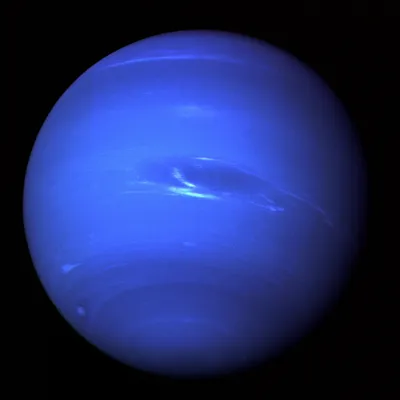
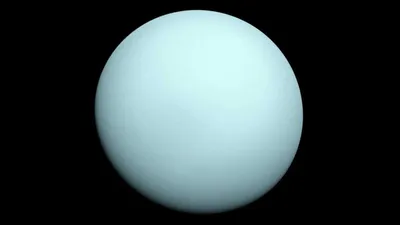
You might have seen the photo of Neptune as a dark or vibrant blue (like in the image here), but it’s more white with a blueish tint, like Uranus. It is a bit bluer than Uranus, though, because its air is more active, and there are less of certain gases blocking the color. Many people think that Uranus and Neptune are super cold. After all, they are called the “ice giants.” But actually, Neptune is much hotter than Uranus and gives out a lot of heat. This creates really fast winds on the planet.
Bonus: Pluto
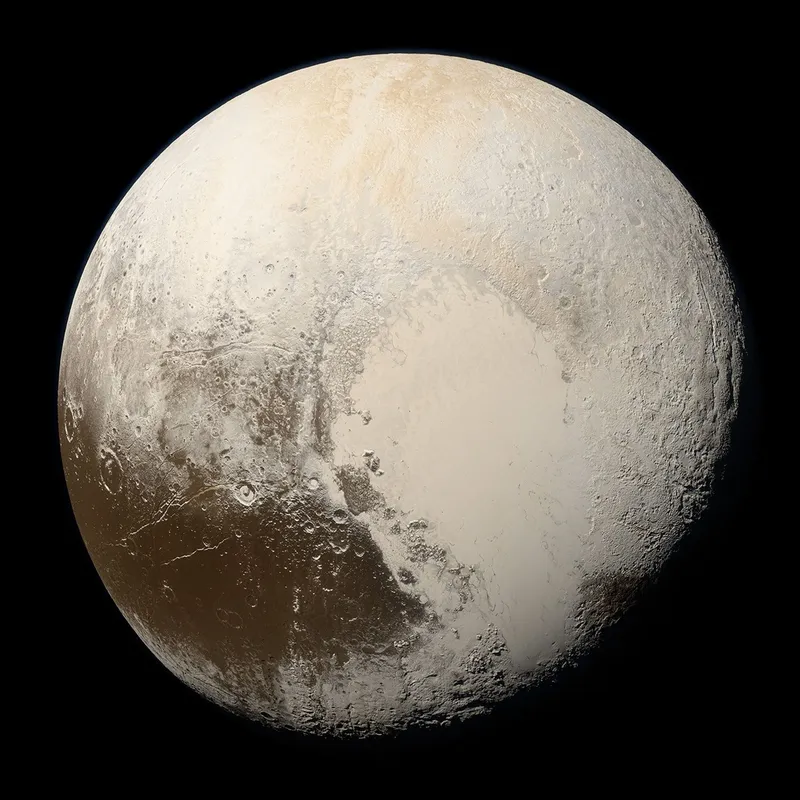
Is Pluto a planet? Is it not? It is one of the big arguments of our time. Science has decided that it probably isn’t, and is instead a dwarf planet. For our solar system, a planet must go around the sun, be mostly circular, and not have much else in its path. Pluto fails that last rule, so it isn’t a full planet. If it was a planet, we’d have to add planets like Ceres (say it like “sair-eez”) and Makemake (say it like “mahh-kay mahh-kay”). That would be a hassle!
Review
There are a lot of planets. There are even planets outside of our solar system. Some are hot, some are cold, some are rocky, and some are full of gas. Some orbit (or move around) the sun alone or with few moons, and others have hundreds of moons as companions. With these planets, we can be sure that space will always be interesting.